Metaphors for Healing: The Tale of the Silverback
Many years ago, I had the opportunity to visit the National Zoo in Washington, DC. While there, I made sure to visit the Great Ape House exhibit which houses a large variety of ape species from the very small (lemurs and gibbons) to the incredibly massive (orangutans and gorillas). Much to my eventual dismay, the sign indicating the “Do’s and Don’ts” within the Great Ape House was hidden from view behind some very large tropical plants.
Coming around one corner, I was met with the largest ape I had ever seen in my life – Baraka, the four-hundred-pound silverback gorilla – who was busy munching on a piece of what looked to be bamboo. I stared in fascination at this massive creature, completely in awe at the gentleness he was exhibiting. Baraka would periodically look over at me before going back to his bamboo. This is where the sign for the “Do’s and Don’ts” would have come in quite handy. Not even thinking about it, I had been staring at this giant silverback for a good five minutes which, any sensible person would tell you, is a sign of aggression.
I watched as Baraka put down his treat, slowly raised himself up and stalked towards the thick transparent front to his enclosure. I immediately felt a tightness in my chest, a primal fear that most of us in our civilized world have forgotten, the fear of the hunted. As he approached, I felt frozen in place, unable to retreat, nearly unable to breathe. He balled his fist and THUMP! He punched the window, showing his strength and reminding me of proper primate etiquette. Baraka then quietly returned to his snack.
This story is important to illustrate the power that Baraka, the four hundred-pound silverback gorilla, possessed. And it is that level of power that leads us to our newest Metaphor for Healing.
Imagine you were having a tug-of-war game with Baraka. Better yet, imagine that Baraka was letting you have a tug-of-war game with him! There’s no way that you could overpower the great ape, we’re just not built for that. Thankfully, Baraka has only been holding steady, he has yet to exert his full force, yet you remain stuck. Now imagine if you gave some slack to the rope. You could imagine Baraka possibly getting bored with the game and going off to look for something else to do, like finding a snack.
I liken this to the tug of war between your conscious and subconscious mind. This tug of war game is what is keeping you stuck in pain and dysfunction. In an effort to protect you following injury, your subconscious mind begins to cordon off the traumatized regions, which leads to a tightening of the soft tissues in the area and altering how we move. These subconscious “bracing” or “holding” patterns can keep us stuck in our injury, constantly fighting against Baraka, the four hundred-pound silverback.
John Barnes, the Father of Myofascial Release, speaks often about the “800-pound gorilla,” meaning our mind, specifically the subconscious mind. In this article from Massage Magazine (https://www.massagemag.com/therapeutic-insight-the-john-f-barnes-myofascial-release-perspectivetraumatic-imprints-part-1-11998/), John explains the reason that so many therapies, while well-intentioned and logical, ultimately fail due to the lack of understanding of this deep and reflexive protective mechanism.
The gentle pressures and stretches utilized in MFR assist in decreasing this subconscious protection by not pushing past the barriers set by the mind, much like giving in to Baraka in the tug of war game. When the mind can begin to soften its protective hold on the physical body, reducing these bracing/holding patterns, the structural changes imparted by MFR and the increased flexibility and strength built through your exercise program can finally work the way they were intended to, leading you closer to the pain-free and active lifestyle you hope for.
All you have to do is let Baraka win!
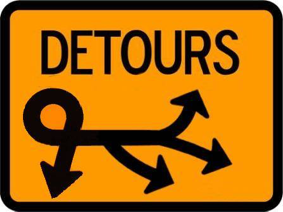 One of the main roads leading to The Center in Langhorne was closed this past week. As I drove in each day to the office, I was surprised by how little it seemed to affect the traffic patterns. While there were some more cars in certain areas, traffic still moved at a consistent pace – very little interruption or delay.
 these detours within the body. As these detours are removed, the process of relearning can begin to occur. We achieve this by beginning to increase flexibility and strength that your body has been lacking for a long time – returning you to a state of balance where the body’s own inherent self-correction can begin to take over.
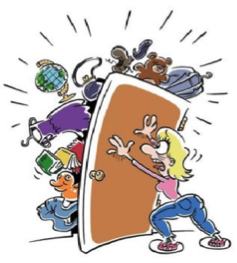 Imagine that you have a party planned for the weekend, but you haven’t had a chance to properly clean the house and prepare it for your friends’ arrival. What to do? Many of us might rely on our “junk closet” – get all that mess pushed into the closet and worry about it after the party.
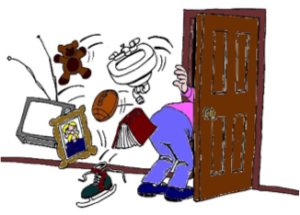 The constant cycle of injury, stress, repetitive movements, compensatory patterns and the resultant restrictions and weakness within the myofascial system is akin to shoving everything into your body’s “junk closet”. In a very real way, the restrictions within the myofascial system are like a closet; the body, in an effort to protect the traumatized area as well as provide support and stability, solidifies itself into a restriction.
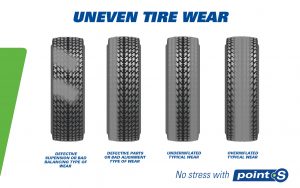 Imagine that you return home from driving your car and notice some uneven wear on your front driver’s side tire. You take your car to the best mechanic in town and have them put on the best radial tire that money can buy. The mechanic doesn’t change the alignment, check the wheel well, etc.; they just replace the worn tire with the new tire. You thank them, pay your money and drive away; unfortunately, 3 months later, you’ll be back with uneven wear on the front tire. The real problem was never the tire. Makes sense, right? Logical? Common sense, even?
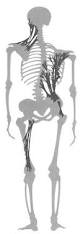 Surgery, especially of the orthopedic variety, is incredibly similar to this idea. Over time, our bodies become out of alignment due to injury, misuse, disuse, overuse, habitual postures, repetitive movements and weakness and develop the resultant restrictions through our fascial system (which can be read about